
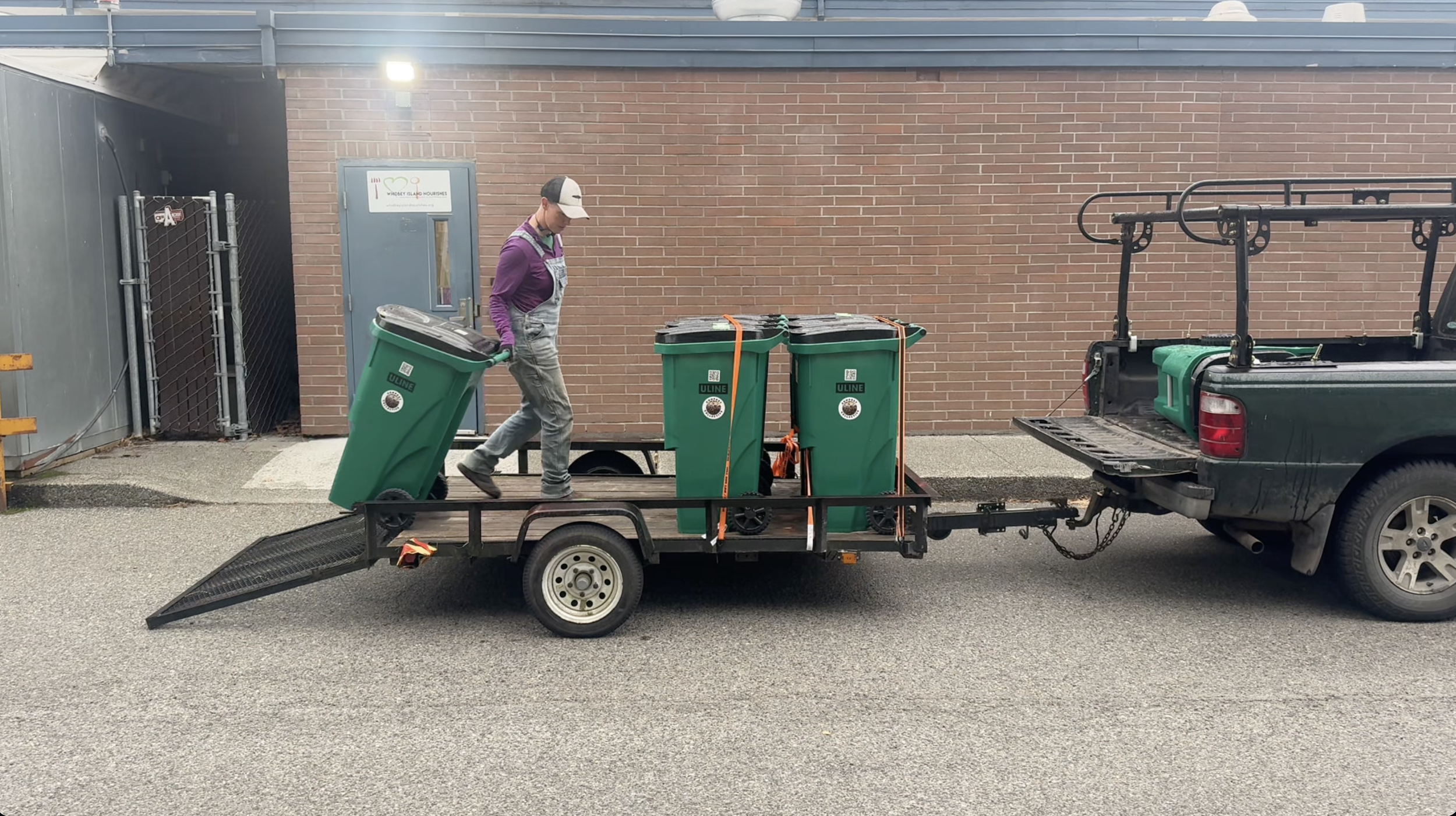
Food scraps collection for commercial kitchens
More about our Commercial Food Scraps Collection Program
Most of what a kitchen throws away is food. In waste audits at three South Whidbey restaurants, food scraps made up as much as 85 percent of dumpster weight. Pulling that out of the garbage means less weight going to the landfill 400+ miles away and more compost going back to farms and gardens here.
How it works
We pick up your pre- and post-plate food scraps weekly. You get containers and we train your staff on what goes in them, so the routine is clear from the first shift. The first month is free, which gives us both a read on how much your kitchen actually generates. After that, your rate is based on that volume, so a cafe and a full-service restaurant aren't paying the same thing.
Getting started
Contact us to talk through what your kitchen needs.
Start with a free first month while we learn your volume.
Sign up at a rate based on what your kitchen generates.
We deliver containers, train your staff, and start weekly pickup.
Get in touch to talk about the needs of your business
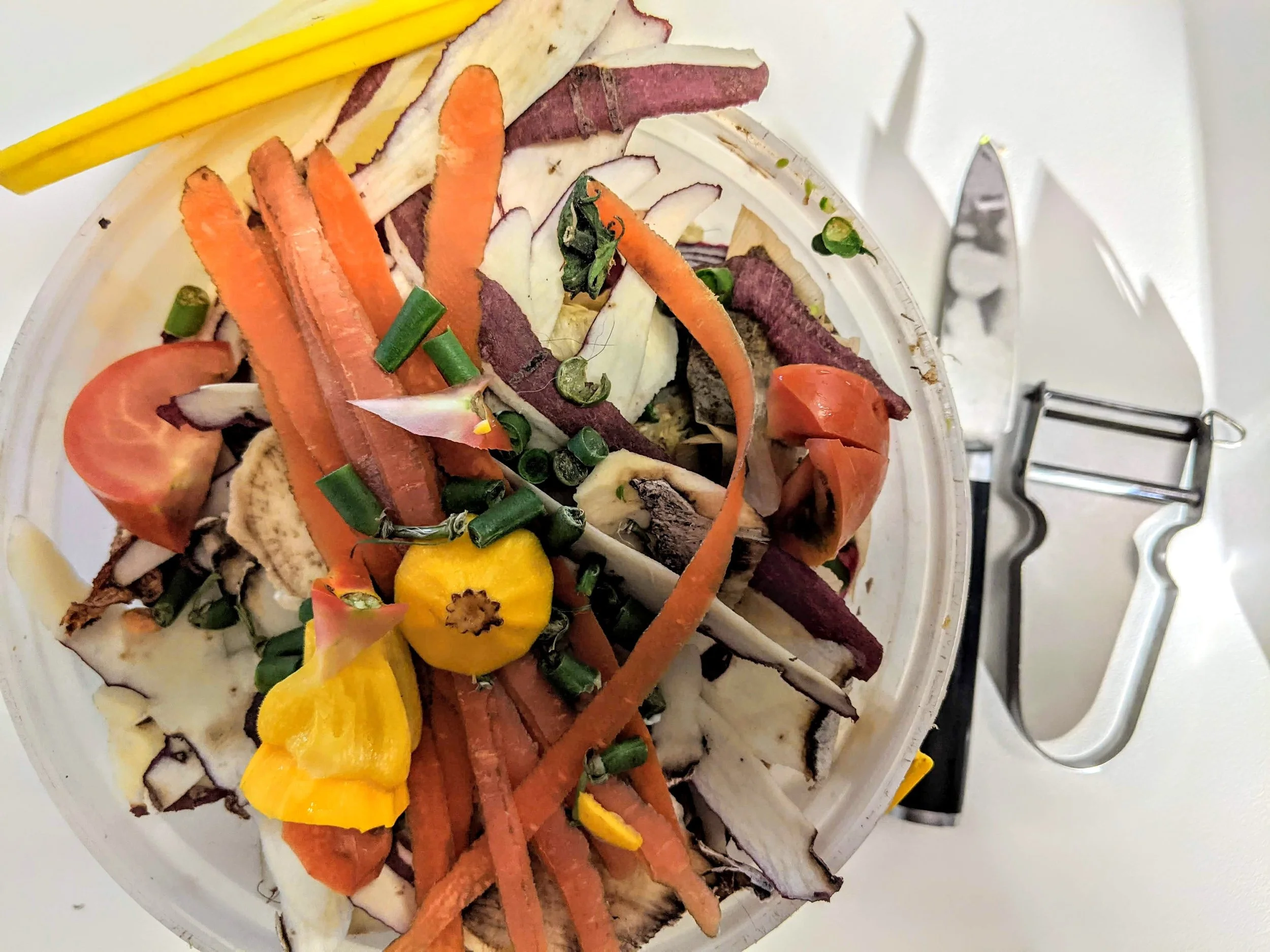
We take everything you can eat, and a little bit more
Materials we accept
All food scraps
Fruits & vegetables, including citrus
Meat, dairy, bones
Bread, grains, nuts, seeds
Food-soiled paper (napkins, paper towels, paper containers without plastic liners)
Wooden utensils (cutlery, stir-sticks, toothpicks)
Things we don’t take
No produce stickers, ties or rubber bands
No ‘compostable’ plastics
No paper containers with plastic lining
No wax paper
No pet waste
No excess grease
A note on "compostable" plastics:
These labels aren't regulated, so "compostable" or "biodegradable" can appear on a product without meeting any particular standards. Many are made with the same chemical additives as regular plastic, and less is known about their toxicity. Because of that, and because they contaminate the compost we make, we ask you to leave them out.